

Easy Pot Roast
Easy Pot Roast
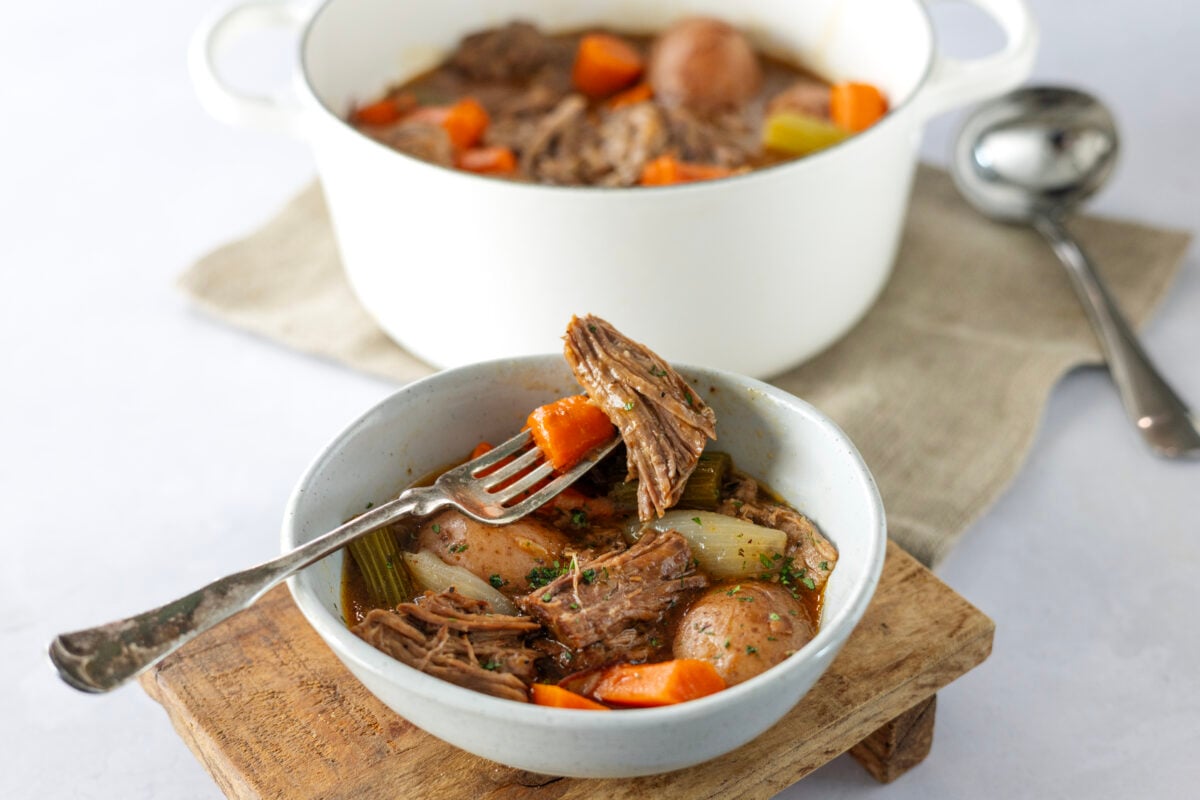
There are few dinners more comforting than a big pot of tender beef, potatoes, carrots, celery, and onions simmering together until everything is rich, savory, and fall-apart tender. This Easy Pot Roast is the kind of meal that feels perfect for a Sunday dinner, a chilly evening, or any time you want something hearty without making a complicated recipe.
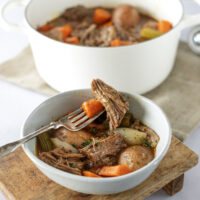
The star is a 3- to 4-pound beef chuck roast, which is seared in butter before it slowly simmers in beef stock, apple juice, Worcestershire sauce, and a simple blend of seasonings. As the roast cooks over low heat, the tougher connective tissues gradually break down, turning what starts as a firm cut of beef into incredibly tender meat that practically pulls apart with a fork.
The vegetables cook right alongside the roast, absorbing all that savory flavor, and a quick cornstarch slurry at the end lightly thickens the cooking liquid into a simple gravy sauce.
It’s classic comfort food made with simple ingredients, and it all comes together in one pot.
Why You’ll Love This Easy Pot Roast Recipe
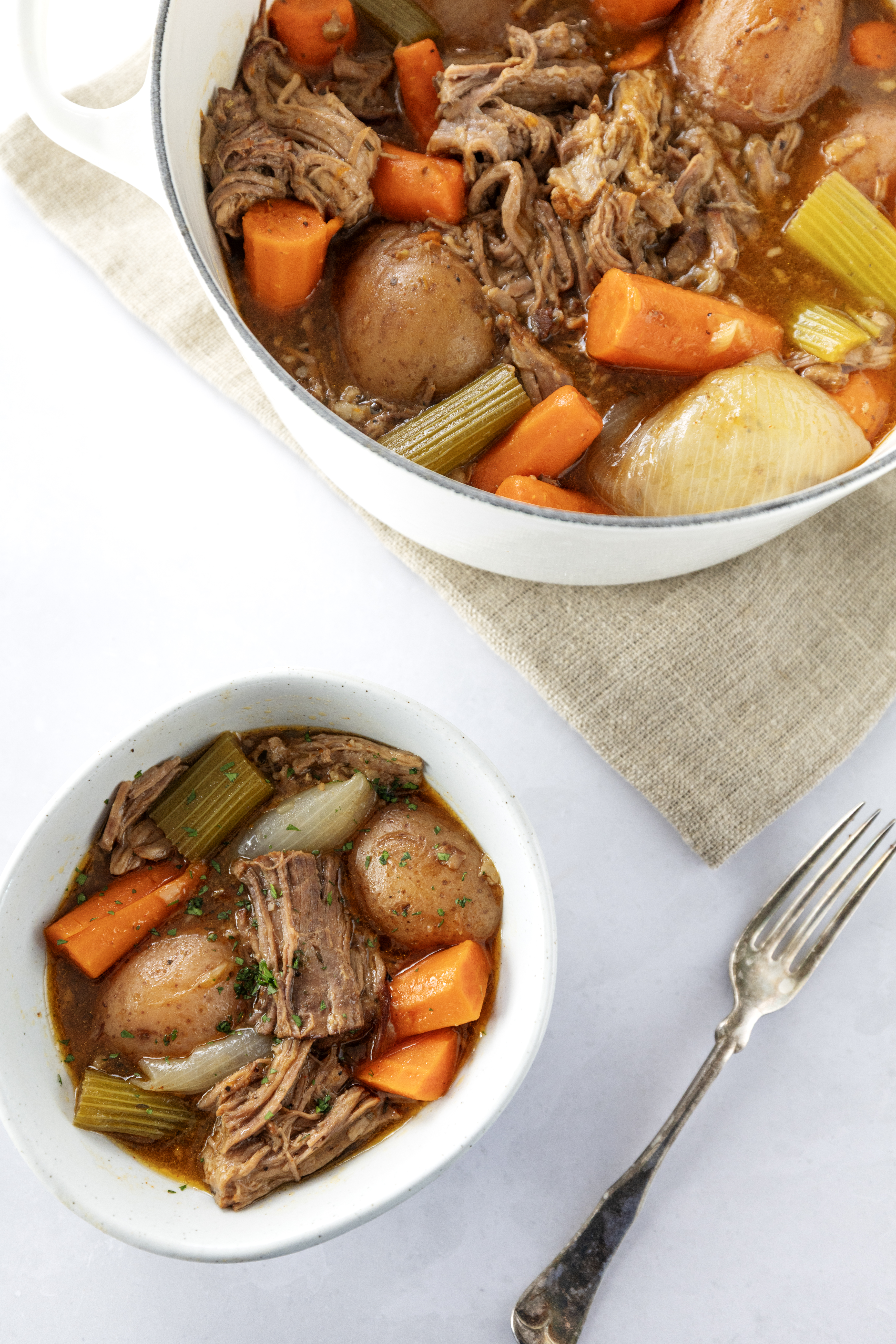
A good beef pot roast doesn’t need to be complicated. What it does need is the right cut of beef, enough cooking liquid, and plenty of time at a low temperature.
You’ll love this recipe because:
- It uses an affordable chuck roast.
- Everything cooks together in one large pot or Dutch oven.
- The beef becomes fall-apart tender.
- Potatoes, carrots, celery, and onion make it a complete meal.
- Apple juice adds subtle sweetness without making the dish taste fruity.
- Beef stock and Worcestershire sauce give the braising liquid plenty of savory flavor.
- The gravy thickens right in the same pot.
- You don’t need red wine.
- It’s a great make-ahead dinner.
- Leftovers taste even better the next day.
If you’ve been looking for a classic pot roast recipe that doesn’t rely on a seasoning packet, this version gives you all that familiar flavor from scratch.
Ingredients You’ll Need
For this easy pot roast recipe, you’ll need:
- 3–4 pound beef chuck roast
- 4–6 red potatoes
- 3 carrots, cut into pieces
- 1 medium yellow onion, cut in half
- 2 celery stalks, cut into pieces
- 3 tablespoons butter
- 2 cups beef stock
- 1 cup apple juice
- 1¼ cups water, divided
- 2 teaspoons kosher salt
- 1½ teaspoons garlic powder
- 1½ teaspoons onion powder
- 1 teaspoon black pepper
- 1 teaspoon paprika
- ½ teaspoon dried thyme
- ½ teaspoon dried parsley
- ¼ teaspoon dried rosemary
- ½ teaspoon beef bouillon powder
- 1 teaspoon Worcestershire sauce
- 2 tablespoons cornstarch
What Is the Best Meat for Pot Roast?
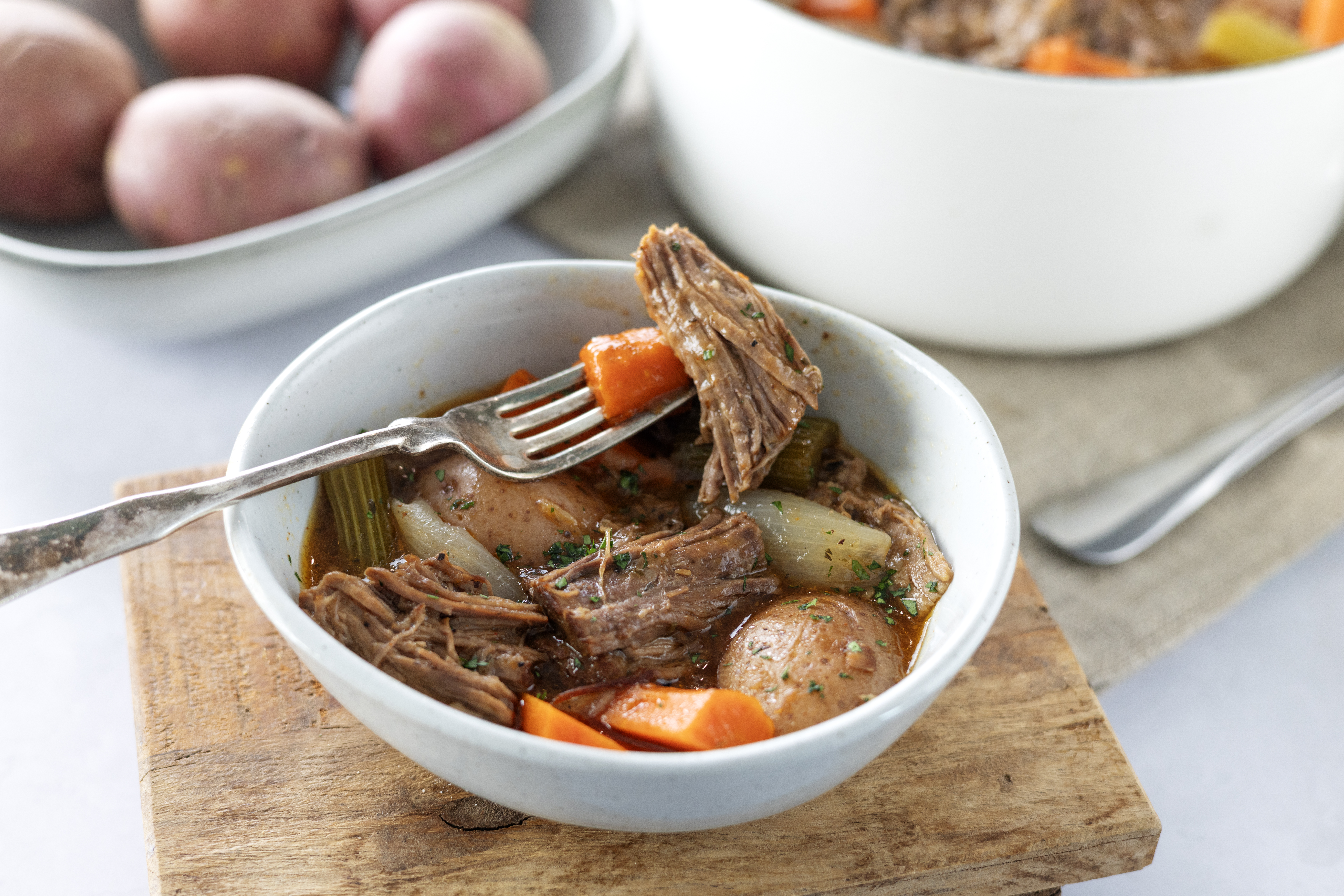
For me, beef chuck roast is the best meat for pot roast.
Chuck comes from the shoulder area of the cow and contains quite a bit of connective tissue and marbling. That means it can seem tough when cooked quickly, but it’s exactly what makes it perfect for a slow cooking method.
During the long cook time, the connective tissue breaks down and turns into gelatin, giving you tender meat and a richer braising liquid.
That’s why a boneless chuck roast can become so soft after simmering for several hours.
Other Cuts of Beef You Can Use
Chuck is my favorite way to make this recipe, but other tougher cuts of meat can also work.
You may see pot-roast-friendly beef sold under different names, including:
- Rump roast
- Round roast
- Arm roast
- Shoulder roast
- Chuck shoulder roast
These beef cuts vary in fat and connective tissue, so cooking time may be slightly different.
For the best results, look for a roast with visible marbling rather than an extremely lean cut.
Why Tougher Cuts Make Better Pot Roast
It may sound backwards, but the best cuts of beef for pot roast are usually the cuts you wouldn’t choose for quick cooking.
Cuts with lots of connective tissue need a long period of time over low heat.
As that connective tissue breaks down, the beef becomes tender and juicy.
A very lean, tender cut can actually dry out during such a long cooking time.
So for the perfect pot roast, chuck really is a good thing.
Why Searing the Beef Is an Important Step
Before the roast begins simmering, it gets browned over medium-high heat in butter.
This step creates the deep brown crust that gives your finished pot roast more flavor.
Searing does not literally “seal in” the juices, but it does create flavorful browned bits through the Maillard reaction.
Those browned bits at the bottom of the pan eventually mix into the cooking liquid and help create a deeper, more savory sauce.
For the best results, let the pot get hot enough before adding the beef and don’t move the roast around constantly.
What Kind of Pot Should I Use?
A heavy Dutch oven is ideal.
Something like a Le Creuset or another heavy enameled cast-iron pot holds heat well and gives you enough room for both the beef roast and vegetables.
A heavy large pot also works.
You want something with a tight-fitting lid because the roast needs to simmer gently for a long time without losing too much liquid.
Tools for this recipe
 Buy Now →
  Buy Now →
  Buy Now →
 How to Make Easy Pot Roast
Step 1: Prepare the Beef and Vegetables
Cut the carrots and celery into large pieces.
Cut the onion in half.
Leave small red potatoes whole, or cut larger ones into halves or quarters.
Pat the beef chuck roast dry if needed.
Removing excess surface moisture helps the meat brown more effectively.
Step 2: Melt the Butter
Place a large pot or Dutch oven over medium-high heat.
Add 3 tablespoons butter and allow it to melt.
You could substitute olive oil if needed, but butter adds a little extra richness.
Step 3: Sear the Beef
Place the beef roast in the hot pot.
Sear for about 4 minutes per side.
Let it sit undisturbed long enough to develop a deep brown crust before turning.
If the roast has thicker edges, you can briefly sear those as well.
Step 4: Add the Vegetables
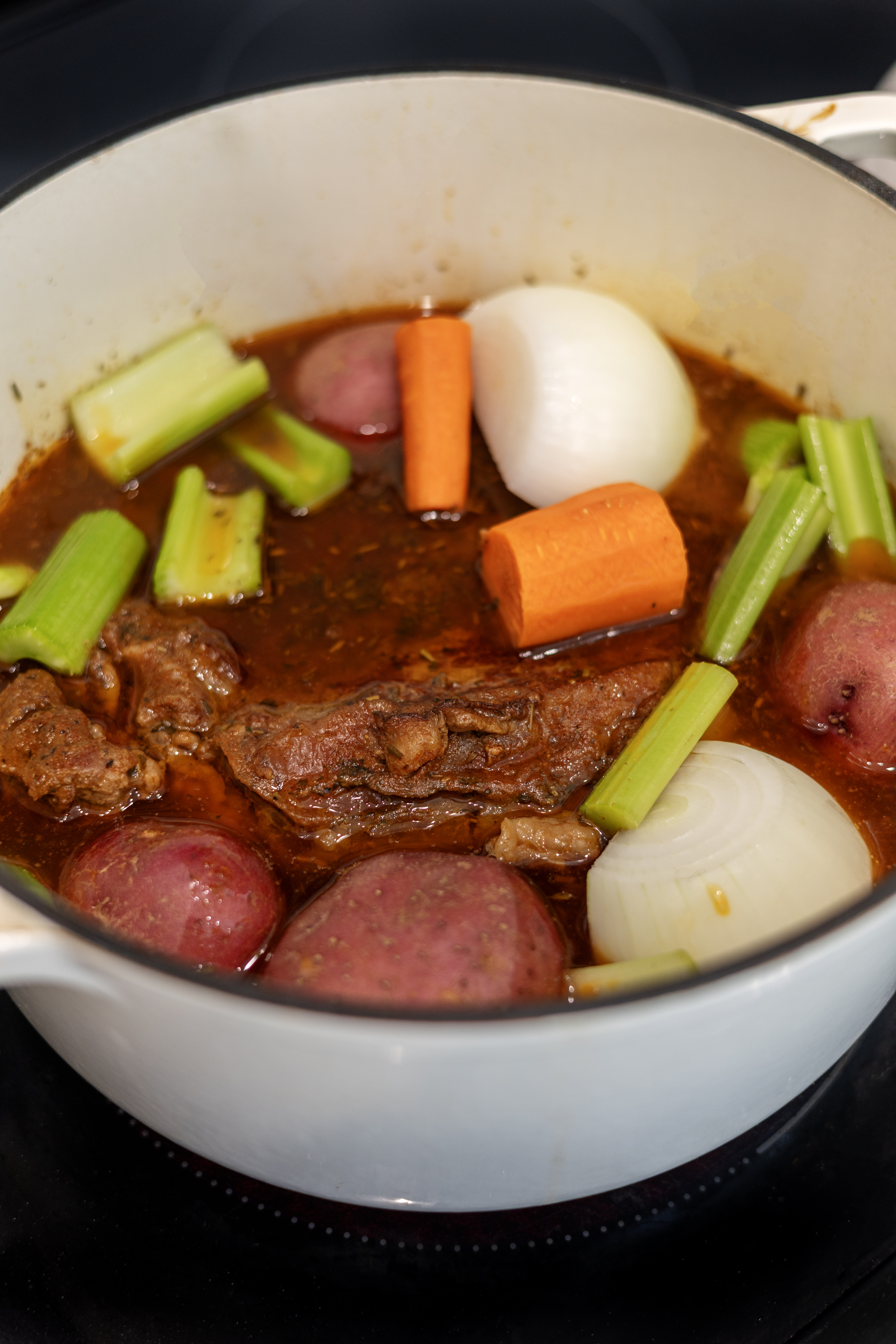
Once the beef is browned, add:
- Red potatoes
- Carrots
- Onion
- Celery
Arrange the root vegetables around the roast.
Step 5: Mix the Seasoning Liquid
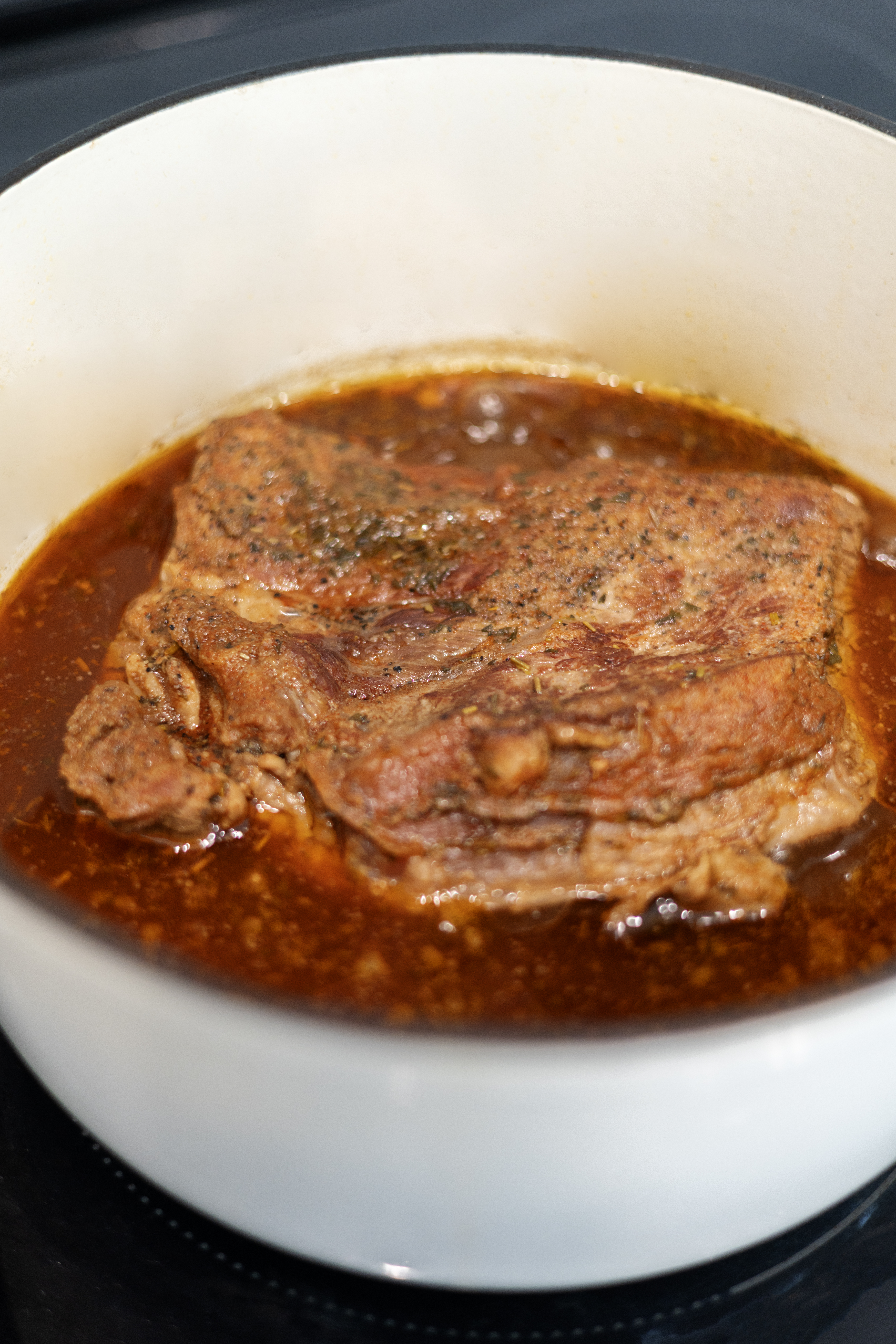
In a separate cup or small bowl, combine:
- 1 cup water
- Kosher salt
- Garlic powder
- Onion powder
- Black pepper
- Paprika
- Dried thyme
- Dried parsley
- Dried rosemary
- Beef bouillon powder
- Worcestershire sauce
Stir well.
Pour this seasoning mixture into the pot.
Step 6: Add the Beef Stock and Apple Juice
Pour in:
- 2 cups beef stock
- 1 cup apple juice
The cooking liquid should come partway up the roast rather than completely covering it.
That’s what makes this more of a braise than a beef stew.
Step 7: Bring Everything to a Boil
Bring the braising liquid to a boil.
Once bubbling, immediately reduce the heat.
You don’t want the beef boiling aggressively for hours.
Step 8: Simmer Low and Slow
Reduce the heat to low.
Cover the Dutch oven and simmer for 90 minutes.
The low temperature is what allows the tough connective tissues to break down gradually.
Step 9: Check and Continue Cooking
After 90 minutes, carefully uncover the pot.
Gently stir or reposition the vegetables if needed.
Cover again and continue cooking for another 75 minutes.
At this point, the roast should be very tender.
If it still feels tough, don’t assume it is overcooked. With chuck roast, toughness often means it simply needs more time.
Continue simmering until a fork goes in easily and the beef begins pulling apart.
Step 10: Break Apart the Beef
Once the roast is tender, use forks or tongs to begin breaking it into large pieces.
You can shred it completely or leave larger chunks depending on how you like your pot roast.
Step 11: Make the Cornstarch Slurry
In a small bowl or measuring cup, combine:
- ¼ cup cold water
- 2 tablespoons cornstarch
Whisk until smooth.
Always mix cornstarch with cold water before adding it to hot liquid. Adding dry cornstarch directly to the pot can create lumps.
Step 12: Thicken the Gravy
Pour the cornstarch mixture into the cooking liquid while stirring.
Continue simmering for about 15 minutes.
The liquid will thicken slightly into a light gravy sauce that coats the beef and vegetables.
Remove from the heat and serve.
Why Apple Juice Works in Pot Roast
Apple juice may sound unusual in a beef pot roast, but it works surprisingly well.
It doesn’t make the roast taste like apples.
Instead, it adds a subtle sweetness that balances the saltiness of the beef stock, bouillon, and Worcestershire sauce.
That small sweet-savory contrast helps round out the braising liquid.
It’s similar to how some recipes use red wine or tomato paste to add another dimension of flavor.
Do I Need Red Wine?
No.
Many classic pot roast recipes use red wine, and something like Cabernet Sauvignon can add a deep, slightly acidic flavor to the sauce.
This recipe gets that additional complexity from apple juice and Worcestershire sauce instead.
So you can make a flavorful pot roast without opening a bottle of wine.
If you do want to experiment next time, you could replace some of the apple juice or stock with a dry red wine.
Why Use Beef Stock Instead of Water?
Beef stock creates a much richer cooking liquid than water alone.
As the roast cooks, the stock combines with:
- Beef drippings
- Browned bits
- Butter
- Worcestershire sauce
- Vegetables
- Herbs
- Bouillon
That eventually becomes the base of the gravy.
You can use beef broth if that’s what you have, but beef stock usually has a fuller body and deeper flavor.
Can I Use Chicken Broth?
In a pinch, yes.
Chicken broth is milder, so the final sauce may not taste quite as beefy.
If using chicken broth, the beef bouillon powder becomes especially helpful for adding savory depth.
Potatoes for Pot Roast
I like red potatoes because they hold their shape nicely during the long cooking time.
Baby potatoes also work well.
You can use Russet potatoes, but they’re starchier and may break down more as the roast cooks.
Yukon Gold potatoes are another excellent choice because they become creamy without completely falling apart.
Best Vegetables for Pot Roast
The traditional combination is hard to beat:
- Potatoes
- Carrots
- Yellow onions
- Celery
These vegetables can handle the long cook time and absorb the savory cooking liquid.
You can also add other root vegetables, including parsnips, turnips, or rutabaga.
Fresh Herbs vs. Dried Herbs
This recipe uses dried thyme, parsley, and rosemary because they’re convenient and easy to keep on hand.
Fresh herbs work too.
If you have fresh thyme or fresh rosemary, you can add a few sprigs directly to the braising liquid.
Just remove woody stems before serving.
Bay leaves are another optional addition.
How Do You Know When Pot Roast Is Done?
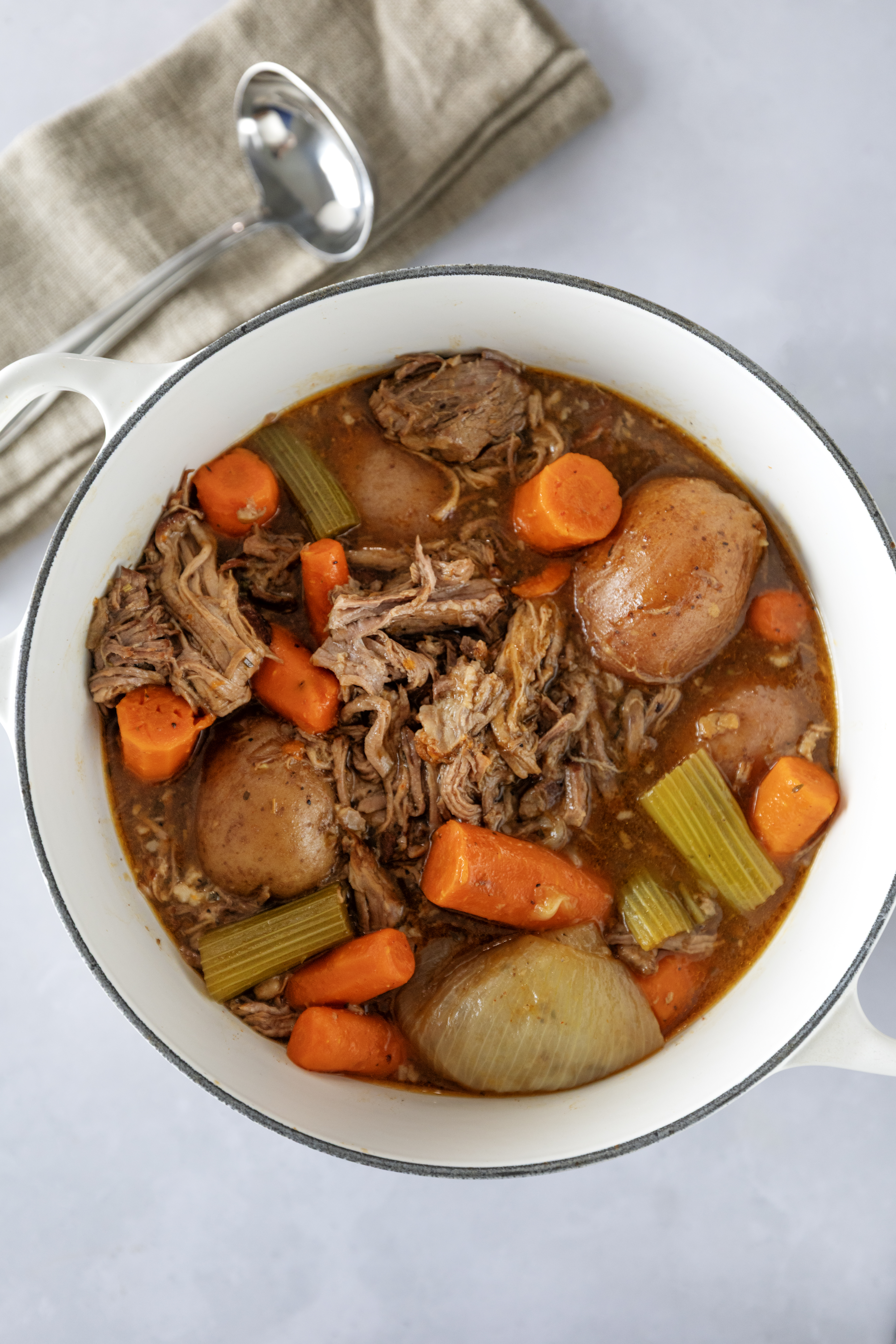
Forget relying only on a timer.
Pot roast is done when the meat is tender enough to easily pull apart.
If you push a fork into the roast and it still feels firm or resistant, it needs more time.
The exact cooking time can vary depending on:
- The size of the roast
- The thickness of the meat
- The exact cut
- Your stove
- How gently the liquid is simmering
For a 3- to 4-pound chuck roast, around three hours of stovetop cooking is usually a good starting point.
Why Is My Pot Roast Tough?
This is probably the most common pot roast question.
A lot of people assume tough pot roast means it has been cooked too long.
With chuck roast, it often means the opposite.
The connective tissues need enough time at a lower temperature to fully break down.
If the meat is still tough, cover the pot and continue cooking.
Check again after another 20–30 minutes.
Can You Overcook Pot Roast?
Eventually, yes.
Once the connective tissue has fully broken down, extremely prolonged cooking can make the meat dry or stringy.
But if you’re using the right cut of beef and plenty of braising liquid, you have a fairly forgiving window.
The biggest thing is maintaining low heat rather than a hard boil.
How to Get the Best Gravy
The cornstarch slurry gives you a lighter gravy without needing flour or a separate roux.
For a thicker gravy, allow the cooking liquid to simmer uncovered for a little longer after adding the slurry.
If it gets too thick, stir in a splash of beef stock or water.
Taste before serving and adjust the kosher salt and black pepper as needed.
Pot Roast Tips for the Best Results
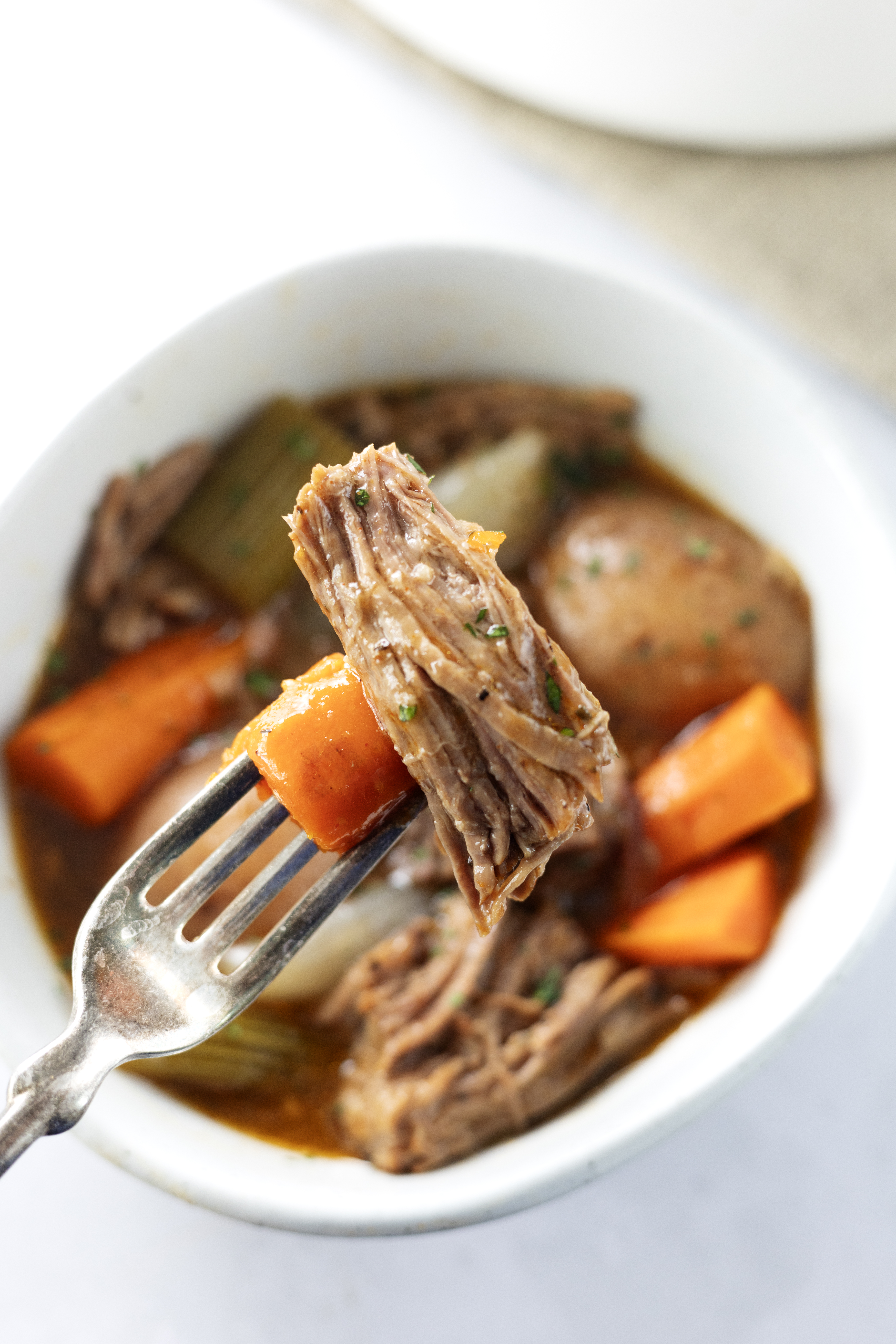
Choose the Right Cut of Beef
Chuck roast is my first choice.
Sear the Beef Well
That browned crust creates a lot of flavor.
Don’t Rush the Cooking Time
Low and slow is the key to tender meat.
Use a Heavy Pot
A Dutch oven provides steady, even heat.
Keep the Heat Low
Once the liquid boils, reduce it to a gentle simmer.
Check the Liquid
If too much evaporates during cooking, add a little extra beef stock.
Use Cold Water for Cornstarch
This prevents lumps.
Let Tenderness Determine Doneness
If it doesn’t pull apart easily, cook it longer.
Can I Make This in a Slow Cooker?
Yes.
To make a slow cooker pot roast, I would still sear the beef first in a large skillet because that adds a lot of flavor.
Transfer the seared beef to your crock pot along with the vegetables and cooking liquid.
Cook on low until the roast is fall-apart tender.
Low is generally my favorite setting for tougher cuts of meat because a longer, slower cooking method gives the connective tissue more time to break down.
Can I Make It in an Instant Pot?
You can adapt it for an Instant Pot or pressure cooker.
Sear the beef using the sauté setting, add the liquid and seasonings, then pressure cook until tender.
Because pressure cooking works very differently from stovetop braising, the cooking time and liquid quantities would need adjustment.
For this particular recipe, I prefer the stovetop method because you get more control over the texture of both the meat and vegetables.
What to Serve With Pot Roast
Pot roast already contains potatoes and vegetables, so it can absolutely be served as a complete meal.
But there are plenty of ways to stretch it or make the dinner feel extra comforting.
Try serving it with:
- Mashed potatoes
- White rice
- Wild rice
- Egg noodles
- Dinner rolls
- Cornbread
- Green beans
- Roasted vegetables
The gravy is especially good spooned over mashed potatoes or rice.
More Recipes From Krystel’s Cooking to Serve With Pot Roast
For an extra-comforting Sunday dinner, serve this pot roast with Red Garlic Mashed Potatoes. They’re made with roasted garlic, butter, and half-and-half, making them perfect for soaking up the savory pot roast gravy.
Brown Sugar Glazed Carrots are another great side. The buttery maple-brown-sugar glaze gives you a sweet contrast to the rich beef and savory braising liquid.
If you want bread on the table, Honey Butter Dinner Rolls are soft, homemade rolls brushed with honey butter while warm. They’re exactly the kind of thing you want for wiping up the last bit of gravy from your plate.
You could also serve the roast with Cheesy Au Gratin Potatoes when you want an especially hearty comfort-food meal, or Easy Wild Rice Pilaf if you’d rather serve the beef and gravy over rice.
How to Store Leftover Pot Roast
Let the beef and vegetables cool, then transfer everything along with some of the cooking liquid to an airtight container.
Refrigerate for up to about 3–4 days.
Keeping the beef in the gravy helps prevent it from drying out.
How to Reheat Pot Roast
The stovetop is one of the best ways to reheat pot roast.
Place the beef, vegetables, and gravy in a covered pot over low heat.
Add a splash of beef stock if the gravy has become too thick.
Heat gently until everything is warmed through.
Individual portions can also be reheated in the microwave.
Can You Freeze Pot Roast?
Yes.
Pot roast freezes very well.
Cool completely and place portions of beef with gravy into freezer-safe containers.
You can freeze the potatoes too, although their texture may become softer after thawing.
For the best quality, use within about 2–3 months.
Thaw overnight in the refrigerator before reheating.
Is Pot Roast Better the Next Day?
It can be.
As the beef sits in the cooking liquid overnight, the flavors continue to blend.
That makes pot roast one of my favorite make-ahead meals.
The chilled fat also rises to the top of the container, so you can easily remove some before reheating if desired.
Frequently Asked Questions
What is the best cut of beef for pot roast?
Chuck roast is one of the best choices because it contains enough fat and connective tissue to become tender during a long, slow cooking process.
Can I use a rump roast?
Yes. Rump roast can work, although it is usually leaner than chuck and may have a slightly different texture.
Why do you sear pot roast first?
Searing browns the exterior of the beef and creates flavorful browned bits in the bottom of the pan, which add depth to the braising liquid.
Does the apple juice make the pot roast sweet?
No. One cup adds only a subtle sweetness that balances the savory beef stock and Worcestershire sauce.
Can I leave out the apple juice?
Yes. Replace it with additional beef stock if you prefer.
Can I use Russet potatoes?
Yes, but they may break apart more than red or baby potatoes during the long cook time.
Why isn’t my roast falling apart?
It probably needs more time. Continue cooking at a low simmer until a fork easily pulls the meat apart.
Can I cook the roast on high heat to make it faster?
I don’t recommend it. A low temperature over a longer period gives the connective tissue time to break down and produces more tender meat.
Can I use flour instead of cornstarch?
Yes, but the technique and amount would need to change. Cornstarch is the easiest way to thicken the gravy at the end without making a separate roux.
Do I need a Dutch oven?
No, but a heavy pot with a lid works best.
Can I add tomato paste?
You can. A tablespoon or two browned after searing the meat would add another layer of savory flavor, although it isn’t needed in the original recipe.
Can I add red wine?
Yes. A dry red wine such as Cabernet Sauvignon can replace part of the cooking liquid if you want a more traditional wine-braised flavor.
Final Thoughts
This Easy Pot Roast is the kind of dinner that proves simple ingredients can turn into something incredibly comforting when you give them enough time.
A well-marbled beef chuck roast, beef stock, apple juice, Worcestershire sauce, herbs, potatoes, carrots, celery, and onion simmer together until the meat is fall-apart tender and the vegetables have soaked up all that savory flavor.
The most important parts are choosing the right cut of beef, getting a good sear, and letting the roast cook slowly enough for those tough connective tissues to break down.
Once that happens, you’re left with tender beef, flavorful vegetables, and a rich gravy that makes the entire pot taste like Sunday dinner.
Serve it straight from the pot, spoon it over mashed potatoes or rice, and make sure there’s something on the table for soaking up the gravy.gather your ingredients and put this foolproof recipe into action. It’s time to satisfy those taste buds and leave everyone blown away. As Julia Child once said, “A recipe has no soul, you as the cook must bring soul to the recipe.” So bring your own soul to this pot roast recipe and elevate it to another level. Happy cooking!
Easy Pot Roast
Ingredients
- 3-4 lb beef chuck roast
- 4-6 red potatoes
- 3 carrots, cut in pieces
- 1 medium yellow onion, cut in half
- 2 celery stalks, cut in pieces
- 3 Tbsp butter
- 2 cups beef stock
- 1 cup apple juice
- 1 ¼ cup water
- 2 tsp kosher salt
- 1½ tsp garlic powder
- 1½ tsp onion powder
- 1 tsp black pepper
- 1 tsp paprika
- ½ tsp dried thyme
- ½ tsp dried parsley
- ¼ tsp dried rosemary
- ½ tsp beef bouillon powder
- 1 tsp Worcestershire sauce
- 2 Tbsp cornstarch
Instructions
- Start by melting butter over medium-high heat in a large pot. Once melted, sear the beef roast for 4 minutes on each side to lock in flavor. Add the vegetables to the pot.
- In a separate cup, combine the seasonings with one cup of water and pour it into the pot. Add the beef stock and apple juice.
- Place half a cube of beef bouillon in the pot and bring it to a boil.
- Reduce the heat to a low simmer, cover, and let it cook for 90 minutes. After this time, check on the roast, gently stir, and cover again for an additional 75 minutes. The beef should now easily fall apart.
- Begin breaking apart the beef roast. Mix 1/4 cup of water with 2 tablespoons of cornstarch and pour it into the pot, stirring to slightly thicken. Continue cooking for another 15 minutes and then remove from heat.
- Serve with rice, mashed potatoes, or enjoy it by itself.
